
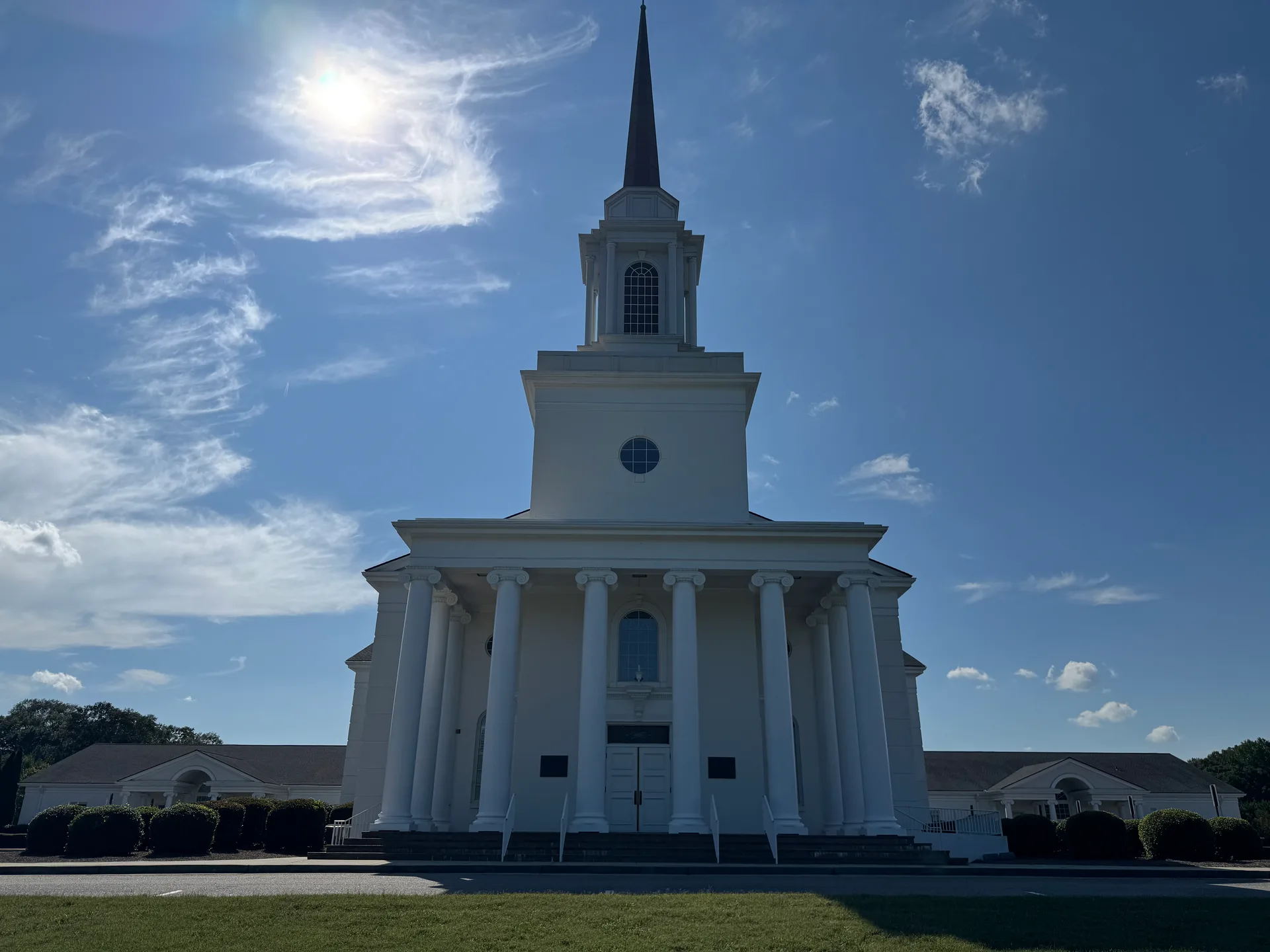
What does church insurance cost in Georgia?
Church insurance in Georgia typically costs between $10,000 and $50,000 per year for established congregations, with a typical annual premium around $20,000. Annual premiums depend primarily on building replacement values, construction age, payroll, program exposures, and carrier choice. Campuses with weekday schools, large bus fleets, or historic properties can exceed $50,000 to $100,000.
Because property valuation represents the single largest factor in your premium, understanding cost brackets helps church finance committees budget effectively:
- Single-Campus Established Church ($10,000–$20,000/year): Typically up to ~$3M building replacement cost, paid clergy and administrative staff, weekly worship, and core Sunday school programs. Includes property, general liability, workers' comp, and directors & officers coverage.
- Mid-Size, Multi-Building Church ($20,000–$50,000/year): Where most established Georgia churches fall ($3M–$10M in building valuation, 5–20 paid employees, active youth ministries, fellowship hall, and church-owned vans). Includes umbrella liability and pastoral counseling endorsements.
- Large Campus, School, or Multi-Site Ministry ($50,000–$100,000+/year): Multiple physical facilities, 20+ staff members, Christian day school, licensed childcare, athletic facilities, or multiple passenger buses. For standalone school facilities, see our breakdown of Christian school insurance cost in Georgia.
For an in-depth analysis of rate trends and underwriting factors, read our complete church insurance cost guide, review current market data in the Georgia Church Insurance Market Report, or see why church insurance premiums are rising in 2026.
What insurance coverages are required for churches in Georgia?
Georgia state law does not require churches to purchase general liability or building property insurance to operate. However, Georgia statutes mandate workers' compensation insurance once a ministry reaches three employees, and require liability coverage on all church-titled motor vehicles. Commercial mortgage lenders also require comprehensive property coverage at full replacement value as a loan condition.
Georgia church leaders must evaluate several specific statutory and contractual obligations:
- Workers' Compensation Mandate (O.C.G.A. § 34-9-2): Any Georgia organization employing three or more workers must maintain state-approved workers' comp. Failure to comply is a misdemeanor, exposing trustees to personal liability.
- Registered Vehicle Requirements: Georgia requires registered motor vehicles to carry liability insurance. Standard state limits ($25,000/$50,000 bodily injury) are inadequate for 15-passenger church vans carrying student groups. Detailed requirements appear in our guide to church van and bus insurance in Georgia.
- Carrier-Mandated Child Safety Screening: While Georgia law does not mandate background checks for church volunteers, specialized carriers like Brotherhood Mutual condition abuse coverage on documented screening policies. Learn more in our guide to church risk management in Georgia.
- Property Tax Exemption: Under the Georgia constitution, places of religious worship are exempt from ad valorem property taxes. That tax status does not protect against physical losses; your ministry must insure sanctuary structures at modern replacement value.
Georgia workers' comp requirements: the 3-employee rule
Georgia law (O.C.G.A. § 34-9-2) requires workers' compensation insurance for any church or ministry with three or more employees, including regular part-time staff. Many Georgia churches mistakenly assume only full-time staff count toward this threshold. When a church employs a senior pastor, a part-time secretary, and a part-time custodian, state law classifies that ministry as a mandatory three-employee employer.
Key workers' comp realities every Georgia church board should understand:
- Part-time workers count: Regular part-time nursery staff, administrative assistants, music directors, and maintenance workers count toward the statutory three-employee threshold.
- Volunteers are excluded: Genuine unpaid volunteers do not count toward the employee threshold and cannot claim workers' comp benefits. However, volunteer injury medical expenses should be covered via medical payments or volunteer accident endorsements.
- Independent contractor misclassification: Paying workers via IRS Form 1099 does not automatically exempt your church. The Georgia State Board of Workers' Compensation examines operational control, and misclassified staff trigger retro-audits and penalties.
For complete statutory details, read our comprehensive Georgia church workers' compensation guide.
What types of coverage does an established Georgia church need?
An established Georgia church needs property insurance, general liability, abuse and molestation coverage, directors and officers liability, commercial auto, umbrella liability, and workers' compensation. Because ministry operations combine public worship, youth activities, pastoral counseling, and transportation, standard business policies leave dangerous operational gaps unless tailored forms are secured.
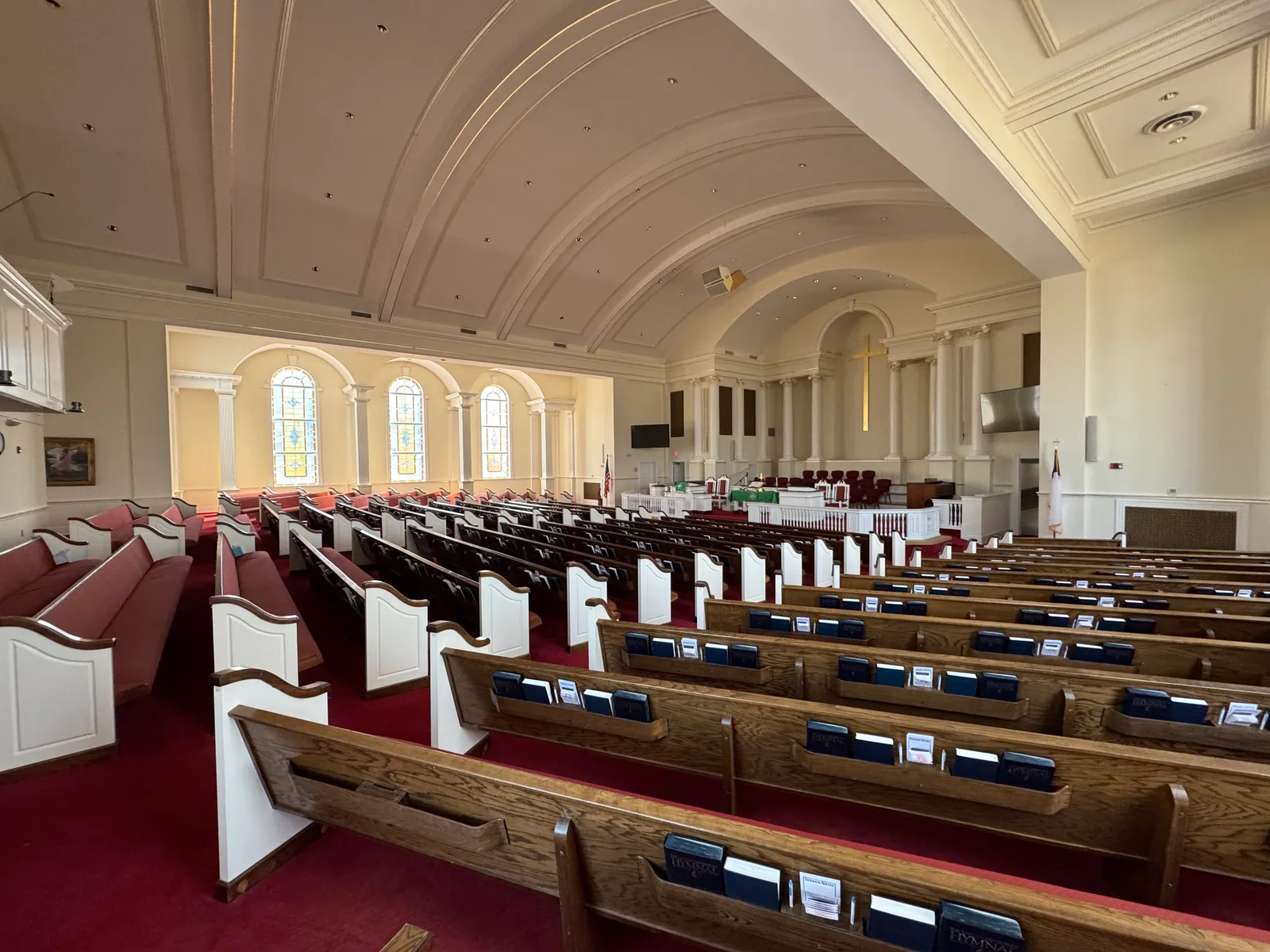
1. Real Property Insurance (Replacement Cost)
Protects sanctuaries, educational wings, fellowship halls, parsonages, pipe organs, audiovisual systems, and outdoor signage. Georgia severe weather—windstorms, hail, fallen pines, and tornadoes—makes replacement cost valuation essential. Read our guide to church property insurance to understand coinsurance rules and valuation traps.
2. Church General Liability
Covers bodily injury and property damage occurring on your campus or during sponsored ministry activities. Most established churches carry $1,000,000 per occurrence with a $2,000,000 or $3,000,000 aggregate limit. Explore our guide on church liability insurance for full coverage details.
3. Abuse and Molestation Coverage
Protects your church, leadership, and volunteers if allegations of sexual misconduct arise. Standard commercial general liability policies almost universally exclude abuse claims. Specialized ministry carriers provide standalone limits and legal defense costs outside policy limits. See our full guide to abuse and molestation coverage for churches.
4. Directors and Officers (D&O) Liability
Protects pastors, trustees, elders, deacons, and committee members from personal financial liability regarding governance decisions, facility management, and bylaws administration. Volunteer board members can be named individually in lawsuits without adequate D&O protection. Review our guide to church directors and officers insurance.
5. Commercial Auto & Hired / Non-Owned Auto
Insures church-titled vans, buses, and trailers. Hired and non-owned auto protection extends liability coverage when staff members or volunteers operate their personal vehicles on church errands, supply runs, or youth retreats.
6. Employment Practices Liability (EPLI)
Covers allegations of wrongful termination, religious discrimination, harassment, or retaliation brought by paid staff. Ministries are not immune to employment disputes. Read our overview of church employment practices liability insurance.
7. Cyber Liability & Wire Fraud
Shields digital member databases, payroll records, and online giving platforms against ransomware attacks and fraudulent fund transfer scams. Learn more about church cyber insurance.
8. Umbrella / Excess Liability
Provides an additional $1,000,000 to $5,000,000 in liability limits above underlying general liability, auto liability, and employer's liability policies. Review our complete guide to church umbrella insurance.
Why work with a ministry specialist instead of a general commercial agent?
A ministry specialist agency insures faith-based organizations exclusively, maintaining direct appointments with specialized church carriers who build policy forms around ministry activities. General commercial brokerages split their attention across commercial construction, restaurants, and retail shops, often placing churches on generic commercial forms that exclude critical ministry risks.
When evaluating insurance agencies across Georgia, church boards should examine these key differences:
- 100% Ministry Book: At MinistrySure, church insurance is not a side department—it is all we do. When you call our office, you speak with team members who understand church boards, Christian education, and ministry risks.
- Direct Access to Ministry Carriers: We represent carriers built specifically for ministries, including Brotherhood Mutual, Insurance Board, Philadelphia Insurance, and Glatfelter.
- Ministry-Specific Policy Language: Generic commercial policies regularly exclude pastoral counseling, volunteer injury claims, and safety team activities. Ministry-specific forms build these protections into the core policy.
- Advocacy When Losses Occur: If storm damage strikes your campus, our team advocates directly with adjusters experienced in church construction, stained glass restoration, and sanctuary acoustics.
For a detailed breakdown of agency evaluation criteria, read our guides on why to choose a ministry specialist and the best church insurance agency in Georgia.
Common coverage gaps we find in Georgia church policies
The most frequent coverage gaps in Georgia church policies are undervalued property, missing abuse defense coverage, no cyber liability, workers' comp non-compliance, unendorsed volunteer drivers, inadequate umbrella limits, and excluded flood damage. When reviewing existing policies, our advisors discover that most underinsured churches have gaps their trustees were never told about.
- Outdated Building Valuations: Rising Georgia construction costs leave many sanctuaries insured for 30–50% below actual replacement cost, triggering severe coinsurance penalties during partial losses.
- Generic Abuse Exclusions: Trustees assume abuse is included under standard liability, only to discover standard commercial policies exclude sexual misconduct entirely.
- No Hired and Non-Owned Auto: The church owns no vehicles, so auto coverage was omitted—leaving the ministry liable if a volunteer causes an accident while driving for ministry business.
- Overlooked Workers' Comp: Having three paid staff members without a formal workers' comp policy creates criminal liability under Georgia law and leaves trustees personally exposed.
- Unprotected Board Members: Operating without D&O liability exposes personal assets of trustees and finance committee members.
If your church recently received notice of policy cancellation or steep rate increases, explore our step-by-step guidance on church insurance non-renewals.
The question is not whether your church can afford the right insurance. It is whether your ministry can afford to discover it had the wrong insurance after a catastrophic claim.
Ready to review your church's coverage?
Request a thorough coverage review with our team. We will examine your current policies, identify valuation shortfalls, and provide clear recommendations.
Request a Coverage ReviewGeorgia Church Insurance Coverage Checklist
Every Georgia church needs essential property and liability protections, along with state-mandated workers' comp once staffing reaches three employees. Use this diagnostic checklist to evaluate your ministry's current policy program:
Essential Core Coverages
Recommended Ministry Endorsements
Want a comprehensive review of your policy limits? Download our 27-point ministry coverage checklist or take our quick Day-90 coverage gaps check.
Verified Client Reviews
What Georgia Ministry Leaders Say About MinistrySure
Rated 5.0 out of 5 stars based on 82+ verified Google reviews from Georgia churches and Christian ministries.
“I work for two churches, and both have been covered very well by this team. They answer quickly, respond with exactly what I need, and make the process simple. They are kind, polite, and helpful.”
“They get our church needs and are very responsive whenever we reach out. I have never felt ignored or even felt that our church was not a priority. That kind of consistency matters when you're managing a church.”
“Marnie and her team at MinistrySure have been faithful partners to First Baptist Church Columbus for years. They're reliable, responsive, and treat us like family — the kind of church insurance agency that picks up the phone and actually knows your account.”
“Very thorough, asked us questions we never thought to ask, and returned with quotes that saved us a lot of money. That thoroughness gave our board real confidence.”
Frequently asked questions about Georgia church insurance
How much does church insurance cost in Georgia?
Most established Georgia churches pay between $10,000 and $50,000 per year, with a typical annual premium around $20,000. Actual pricing depends on total insured building values, construction type, employee count, claims history, and active programs. Campuses with schools or daycares frequently exceed $50,000 to $100,000.
Is church insurance required by law in Georgia?
Georgia state law does not mandate general property or liability insurance for churches. However, O.C.G.A. § 34-9-2 requires workers' compensation once your church has three or more employees. State law also requires auto liability on church-owned vehicles, and commercial lenders almost always mandate building property coverage.
When does a Georgia church need workers' compensation?
Under Georgia law (O.C.G.A. § 34-9-2), any employer with three or more employees must carry workers' compensation insurance. Part-time employees count toward this threshold alongside full-time staff. If your church employs a pastor, a part-time administrator, and a part-time custodian, workers' comp coverage is legally mandatory.
What coverages should an established Georgia church carry?
A complete Georgia church insurance program includes real property at replacement cost, general liability, abuse and molestation coverage, directors and officers liability, commercial auto or hired and non-owned auto, and workers' compensation. Most established ministries also add pastoral counseling liability, umbrella liability, and cyber liability protection.
Why choose a ministry insurance specialist over a general commercial agent?
A ministry specialist writes faith-based accounts exclusively and understands pastoral counseling, volunteer injury exposures, and church property valuations. General commercial agents split time across restaurants and retail, often using standard commercial policies that exclude abuse claims, volunteer drivers, or church security teams.
What should our church do if we receive a non-renewal notice?
A non-renewal notice is not an immediate cancellation; your existing policy remains active until its stated expiration date. Contact a ministry specialist agency immediately. With access to specialized carriers like Brotherhood Mutual, an experienced agency can review your loss history and secure replacement coverage before your policy lapses.
How do we request a coverage review with MinistrySure?
You can request a coverage review online or by calling (770) 716-0180. We review your current declarations pages, identify coverage gaps or building valuation shortfalls, and explain your options with zero sales pressure. If your current policy is already solid, we tell you straight.
Request a coverage review for your Georgia church
If your church leadership is evaluating your insurance renewal, questioning whether building replacement values are accurate, or looking for a specialist who understands ministry operations, we invite you to connect with our team. MinistrySure provides independent coverage reviews for Georgia churches, Christian schools, and ministries at no cost. We will examine your declarations pages, benchmark your coverage against similar Georgia congregations, and present clear options.
Related guides: Church Insurance Hub · Church Insurance Cost Guide · Georgia Workers' Comp Guide · Church Insurance Non-Renewal Guide · Brotherhood Mutual Agency · Best Church Insurance Agency in Georgia · Best Church Insurance Companies in Georgia · Church Insurance FAQ
Serving ministries across Georgia: Atlanta · Gwinnett County · Savannah · Marietta · Augusta · Athens · Columbus · Macon · Gainesville · Albany · Valdosta