
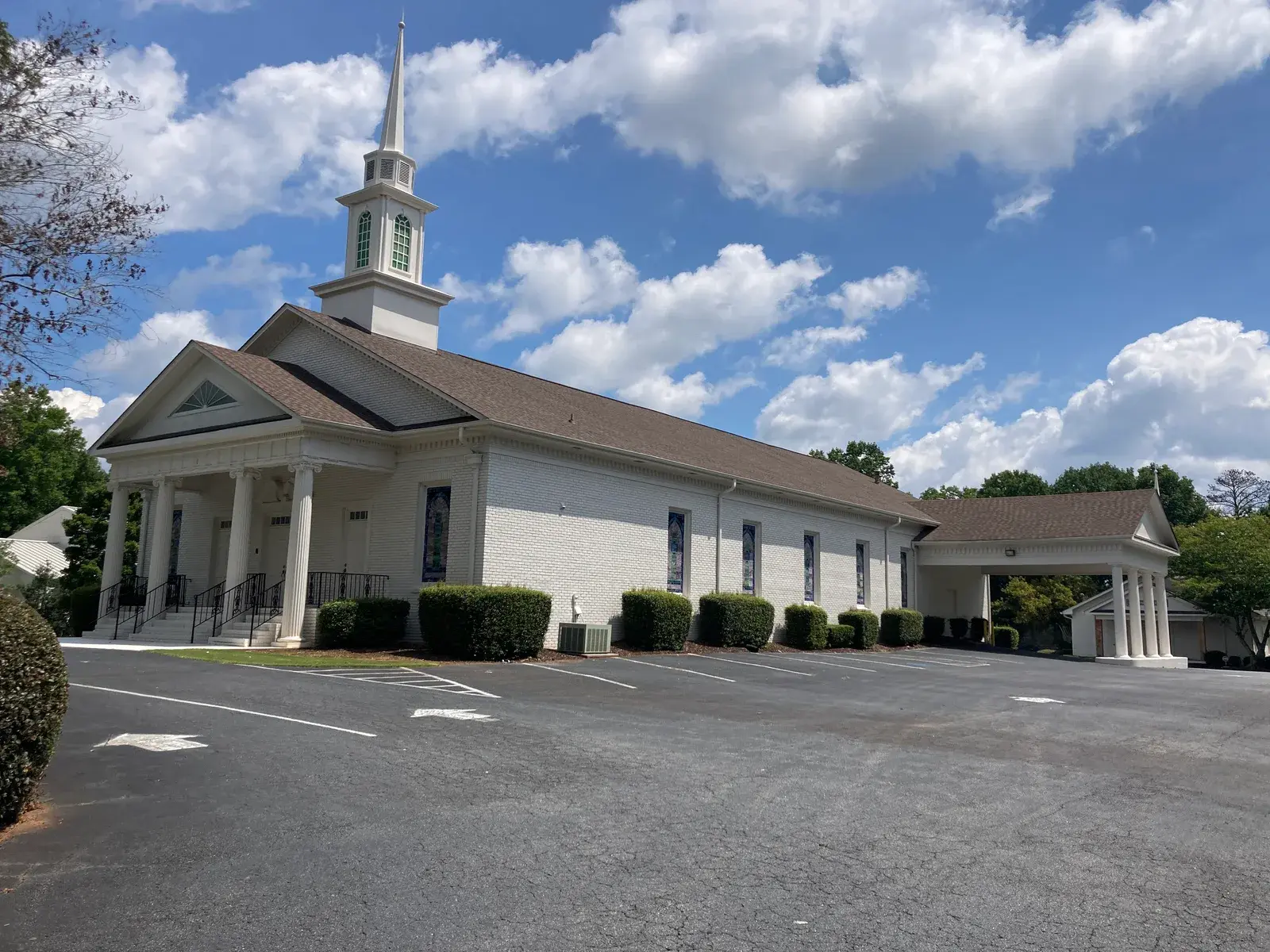
Why a church van needs commercial auto insurance
Any vehicle titled to a church needs commercial auto insurance. A personal auto policy is written for an individual and will not respond when the named insured is an organization — so a church that insures its van on someone's personal policy, or assumes a personal policy applies, is effectively uninsured in a serious accident. Georgia also requires liability coverage on every registered vehicle, and church-owned vehicles are no exception.
Commercial auto for a church covers the same core pieces as any auto policy — liability for injury and damage the church causes, physical damage (collision and comprehensive) to the vehicle itself, medical payments, and uninsured/underinsured motorist protection — but it's rated for how a ministry actually uses the vehicle.
The 15-passenger van problem
Fifteen-passenger vans deserve special attention because the downside is catastrophic. These vehicles carry a well-documented rollover risk that increases sharply when the van is fully loaded, and a single accident can injure a vanload of people — often children or youth on a church trip. Georgia's state-minimum auto limits — $25,000 per person and $50,000 per accident — are nowhere near adequate for that exposure.
Churches that transport groups should carry liability limits well above the state minimum, supported by an umbrella policy that adds another layer on top of the auto limit. The cost of the higher limit is small next to the cost of being underinsured when a van full of students is involved in a crash.
The most common auto mistake we see isn't the van that's underinsured — it's the church that thinks it has no auto exposure at all because it doesn't own a vehicle.
The hired and non-owned auto gap
Most churches assume that owning no vehicle means having no auto risk. That assumption is wrong, and it's expensive. Every week, volunteers and staff drive their personal cars on church business — picking up supplies, transporting youth, running errands for a ministry. If one of them causes an accident while doing church work, the church can be named in the lawsuit, and the church's own policy is what has to answer.
Hired and non-owned auto (HNOA) coverage exists for exactly this. It protects the church's liability for vehicles it doesn't own but uses — personal cars driven for church purposes, and rented or borrowed vehicles. It's inexpensive, and nearly every church needs it, yet it's one of the most common gaps we find on church policies.
Driver screening and Georgia requirements
Carriers increasingly expect churches to screen the people who drive their vehicles — checking motor vehicle records (MVRs) and setting basic driver qualifications like minimum age and a clean record. This isn't just a carrier hoop: documented driver screening reduces accidents and helps keep premiums manageable. If your church transports people, a written driver policy and regular MVR checks are worth putting in place.
For church buses and activity buses, the requirements step up again — liability sized to passenger count, physical-damage coverage for the vehicle, and additional considerations if the bus serves a school or daycare. The principle is the same throughout: match the coverage to how, and for whom, the vehicle is actually used.
Do your church's auto limits fit a van full of students?
A coverage review checks your commercial auto limits, confirms you have hired and non-owned auto, and sizes coverage to how your ministry actually drives.
Request a Coverage ReviewFrequently asked questions
Does a church need commercial auto insurance for its van?
Yes. Any vehicle titled to a church — a van, activity bus, or shuttle — needs commercial auto insurance. A personal auto policy will not cover a vehicle owned by an organization, so relying on one leaves the church uninsured in a serious accident. Georgia also requires liability coverage on every registered vehicle, including church-owned ones.
Why do 15-passenger vans need higher liability limits?
Because the downside is catastrophic. Fifteen-passenger vans carry a well-documented rollover risk, especially when fully loaded, and a single accident can injure a vanload of people — often children or youth. Georgia's state-minimum auto limits ($25,000 per person / $50,000 per accident) are dangerously low for that exposure. Churches transporting groups typically carry far higher limits, supported by an umbrella policy.
What is the hired and non-owned auto gap?
Most churches think that because they do not own a vehicle, they have no auto exposure. They are wrong. When a volunteer or staff member drives their personal vehicle for church business — picking up supplies, transporting youth — the church can be named in a lawsuit if they cause an accident. Hired and non-owned auto (HNOA) coverage protects the church in exactly that situation. Nearly every church needs it.
Does church auto insurance cover volunteer drivers?
A church commercial auto policy covers permitted drivers of church-owned vehicles, and hired and non-owned auto covers the church's liability when volunteers drive their own cars on church business. Carriers increasingly expect churches to screen drivers — checking motor vehicle records and setting basic driver qualifications — as a condition of coverage. Good driver screening also helps keep premiums manageable.
What auto coverage does a church bus or activity bus need?
A church bus needs commercial auto rated specifically for passenger transportation, with liability limits sized to the number of passengers it carries, plus physical-damage coverage (collision and comprehensive) for the vehicle itself. Buses used for a school or daycare have additional requirements. As with vans, the right liability limit is usually well above the state minimum, with an umbrella layered on top.
MinistrySure is an independent insurance agency in Loganville, Georgia specializing exclusively in churches, Christian schools, and faith-based ministries. Led by brothers Matthew and Michael Campbell, MinistrySure has served 700+ Georgia ministries.
Church Insurance in Georgia · Church Liability Insurance · Church Insurance Cost · Why a Specialist · Coverage Review