
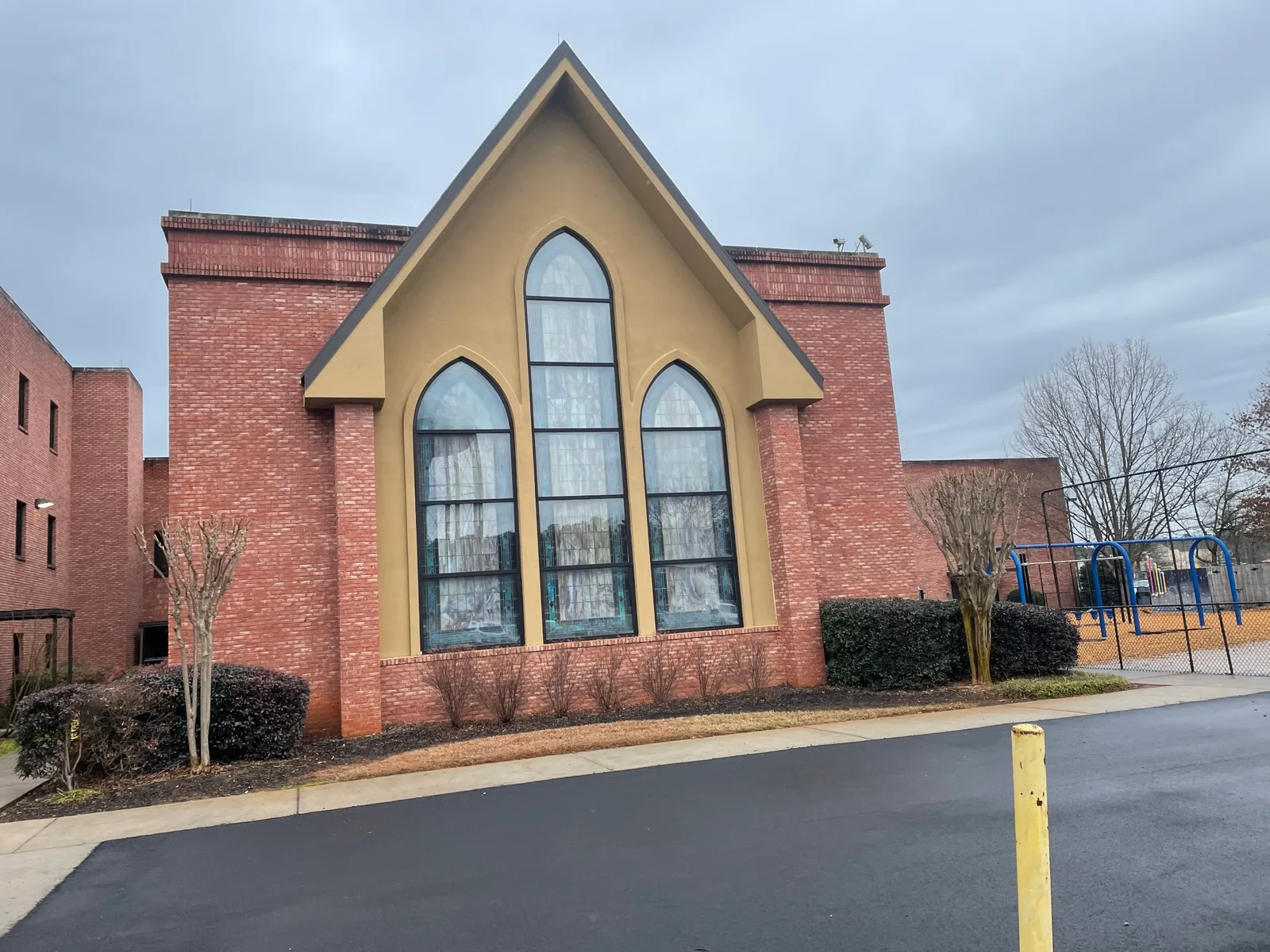
What does church property insurance cover?
Church property insurance covers physical loss to your buildings and the things inside them — sanctuary, fellowship hall, classrooms, offices, parsonage, sound and media equipment, instruments, furnishings, playground structures, and signage — from causes like fire, wind, hail, lightning, theft, and vandalism. A complete program also carries business income and extra expense coverage, which replaces lost offering income and pays the cost of meeting elsewhere while your building is repaired.
That's the easy part. Where churches actually get hurt isn't what is covered — it's how much the building is insured for.
Replacement cost vs. actual cash value
Replacement cost pays what it takes to rebuild at today's prices, with no deduction for age. Actual cash value (ACV) pays replacement cost minus depreciation — so a 20-year-old roof is reimbursed at its depreciated value, not the cost of a new one. Churches should insure on a replacement-cost basis. An ACV settlement on a major loss routinely leaves a gap large enough to stall a rebuild, because the depreciation comes straight out of the church's pocket.
The gap that stays invisible until a claim
A sanctuary insured for $1.2 million that actually costs $2.4 million to rebuild isn't half-covered by accident — it's the most common property mistake we find. The valuation was set years ago and never refreshed while construction costs climbed. The check arrives at half the rebuild, and the congregation makes up the difference.
The underinsurance trap — and the coinsurance penalty
Many Georgia churches are underinsured on property by 20 to 40 percent, almost always because the building valuation hasn't kept pace with rising construction costs. The danger isn't only at a total loss. Most property policies include a coinsurance clause requiring you to insure to a set percentage of replacement cost — often 80 to 100 percent. Insure below that line, and the carrier reduces even a partial claim proportionally. So underinsuring can penalize you on an ordinary fire or storm claim, not just a catastrophe. An accurate, current replacement-cost valuation is what avoids the penalty.
Ordinance or law coverage
When an older church building is damaged, current building codes may force you to rebuild to a higher standard than the original — updated electrical, accessibility, or structural requirements. Standard property limits don't pay for that code-driven extra cost. Ordinance or law coverage does, and for older Georgia churches it closes a gap that can add tens of thousands of dollars to a rebuild.
Flood is excluded — and Georgia weather is shifting
Wind and hail are generally covered by your property policy, but flood is almost always excluded. If your church sits in or near a flood zone — and parts of metro Atlanta, the Gwinnett/DeKalb/Cobb corridor, and south Georgia are particularly exposed — you need a separate flood policy through FEMA's National Flood Insurance Program or a private flood carrier. Flood claims in areas that have "never flooded before" are increasing as weather patterns shift, which makes the separate policy worth a serious look.
Is your church insured for what it would actually cost to rebuild?
A coverage review checks your building values against today's replacement cost, flags coinsurance exposure, and confirms ordinance-or-law and flood are handled.
Request a Coverage ReviewFrequently asked questions
What does church property insurance cover?
Church property insurance covers physical loss to your buildings and their contents — sanctuary, fellowship hall, classrooms, offices, parsonage, sound and media equipment, instruments, furnishings, and signage — from causes like fire, wind, hail, lightning, theft, and vandalism. A complete program also includes business income and extra expense, which replaces lost income and covers the cost of operating elsewhere while you rebuild.
What is the difference between replacement cost and actual cash value?
Replacement cost pays what it takes to rebuild or replace property at today's prices, with no deduction for age. Actual cash value (ACV) pays replacement cost minus depreciation — so a 20-year-old roof is reimbursed at its depreciated value, not the cost of a new one. Churches should insure on a replacement-cost basis; ACV settlements routinely leave a large gap a ministry has to cover out of pocket.
Why are so many churches underinsured?
Because building values are set once and rarely updated. Construction costs have risen sharply, so a sanctuary insured for $1.2 million may actually cost $2.4 million to rebuild today. Many churches are underinsured on property by 20 to 40 percent simply because the valuation hasn't been refreshed in years. The gap stays invisible until a total loss, when the insurance check covers only part of the rebuild.
What is a coinsurance penalty?
Most property policies include a coinsurance clause requiring you to insure the building to a set percentage of its replacement cost — often 80 to 100 percent. If you under-insure below that threshold, the carrier reduces even a partial claim proportionally. So underinsuring doesn't just hurt at a total loss — it can penalize you on an ordinary fire or storm claim, too. Accurate replacement-cost valuations avoid the penalty.
Does church property insurance cover flood?
No. Flood is almost always excluded from standard property policies. If your church sits in or near a flood zone — and parts of metro Atlanta and south Georgia are particularly exposed — you need a separate flood policy through FEMA's National Flood Insurance Program or a private flood carrier. Wind and hail are generally covered by the property policy, but flood is its own coverage.
What is ordinance or law coverage and why does a church need it?
When an older building is damaged, current building codes may require you to rebuild to a higher standard than the original — updated electrical, accessibility, or structural requirements. Ordinance or law coverage pays for that code-driven extra cost, which standard property limits do not. For older churches especially, it closes a gap that can add tens of thousands to a rebuild.
MinistrySure is an independent insurance agency in Loganville, Georgia specializing exclusively in churches, Christian schools, and faith-based ministries. Led by brothers Matthew and Michael Campbell, MinistrySure has served 700+ Georgia ministries.
Church Insurance in Georgia · Church Liability Insurance · Church Insurance Cost · Why Premiums Are Rising · Coverage Review