
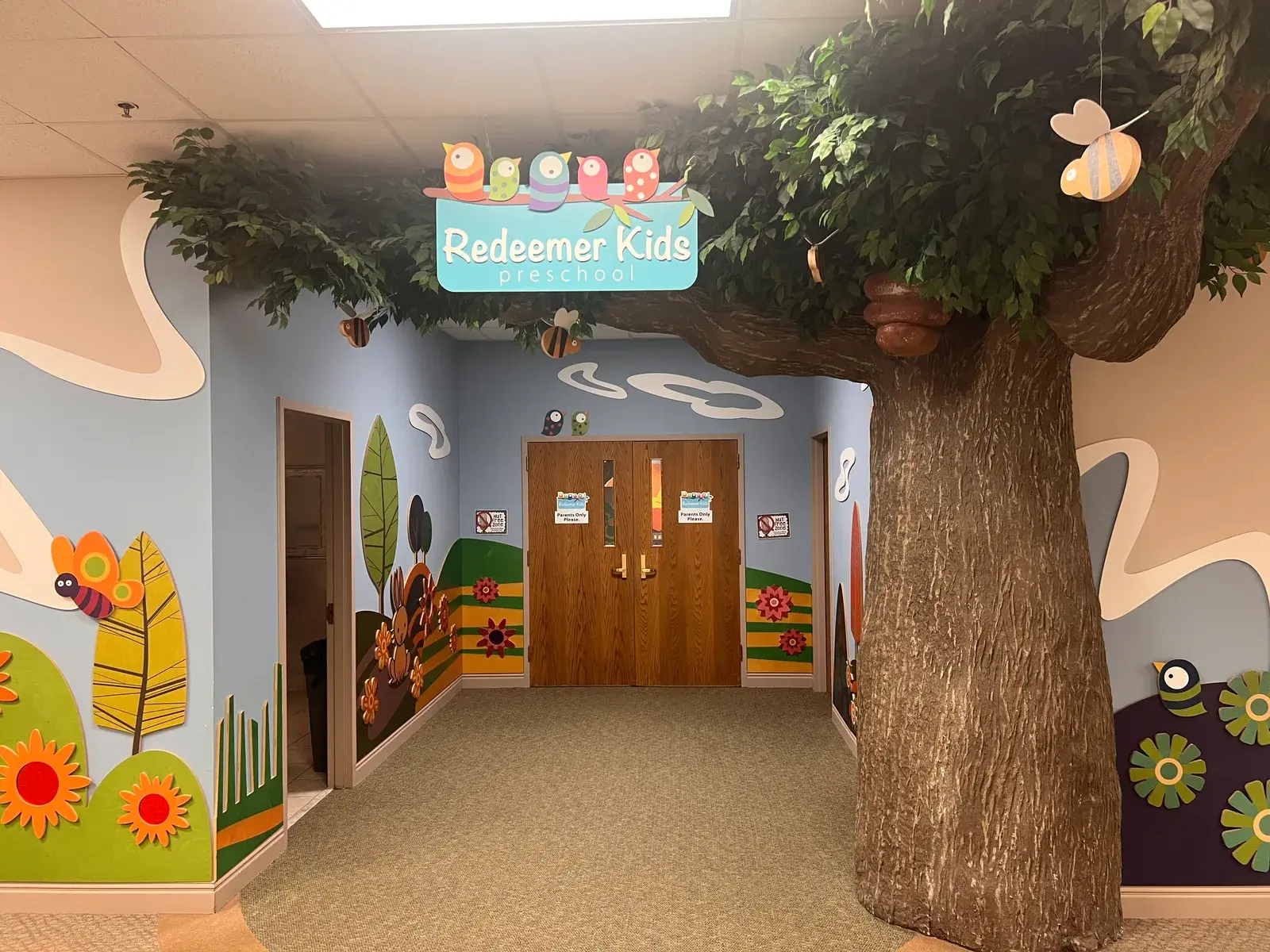
Why a church insurance policy isn't enough for a preschool
A standard church insurance policy is built for weekend worship and congregational ministry, not the daily operations of a weekday preschool or daycare. Classrooms, daily drop-off and pickup routines, playground activities, and nap times create operational exposures standard church forms exclude or severely restrict, leaving the ministry vulnerable if a serious incident occurs.
The danger is that church boards and preschool directors assume the ministry is protected simply because the church building carries insurance. A policy written around congregational meetings does not contemplate the high-frequency physical risks of early childhood care. When an accident or allegation arises from weekday childcare operations, carriers frequently point to policy exclusions or restrictive endorsements that omit non-worship educational services.
Confirming your preschool's exposures are specifically endorsed and scheduled on the church policy is the single most critical step in protecting both the children and the ministry's financial future. For a detailed look at the liability stack, see our companion guide on what liability insurance a church needs for a daycare or preschool ministry.
What a church preschool actually needs
Abuse & molestation — the paramount coverage
A preschool concentrates a ministry's highest-risk exposure. General liability excludes abuse entirely; a dedicated, separate abuse limit — with legal defense paid outside the limit — is non-negotiable.
General & educators legal liability
Covers bodily injury on the premises plus claims arising from the care and instruction itself — teacher supervision, developmental decisions, and the educational administration of a preschool.
Child accident / medical payments
Pays a child's out-of-pocket medical bills directly on a no-fault basis after a playground or classroom fall, helping families quickly and preventing injuries from escalating into lawsuits.
Property, workers' comp & D&O
Property coverage for classrooms and playground equipment, workers' compensation for paid teachers and aides, and directors and officers for the oversight board.
Church preschool vs commercial daycare insurance: why ministry programs differ
A church preschool is fundamentally different from a secular commercial daycare center because it shares campus facilities, staff, volunteers, and mission with the church. Commercial daycare insurance treats childcare as a standalone business, whereas a ministry program integrates with the church's governance, facilities, and spiritual mission under one coordinated policy structure.
Commercial daycare insurance policies sold by general business brokerages are designed for commercial centers in retail strip malls or freestanding commercial buildings. These policies operate on rigid business forms that do not understand shared sanctuary spaces, church volunteer helpers, church committee oversight, or pastoral counsel. When a commercial broker writes a daycare policy for a church, they frequently leave the underlying church property, shared fellowship facilities, and volunteer helpers uninsured for daycare activities.
A ministry-specific insurer understands that children use the church playground, walk through the fellowship hall, and participate in church programs. Writing the coverage through a faith-based carrier ensures every square foot of your campus is contemplated and that your church's governance structure is protected.
One coordinated church and preschool program vs two carriers finger-pointing
Insuring a church with one carrier and its weekday preschool with another creates severe coverage friction during a claim. When an injury happens on a shared playground, fellowship hall, or walkway, separate carriers often dispute who is primary. Writing both under one coordinated ministry program eliminates finger-pointing, providing unified defense and seamless claims handling.
Consider a common scenario: a three-year-old child trips and suffers an injury in a church hallway during Tuesday morning preschool drop-off. If the church has its policy with Carrier A and the preschool bought a standalone commercial policy from Carrier B, each claims adjuster will argue the other policy is primary. Carrier A will claim the injury was caused by preschool operations; Carrier B will claim the hallway floor maintenance was the church's premises responsibility.
While the two insurance companies point fingers, the injured child's medical expenses remain unpaid, legal defense stalls, and the ministry is caught in the middle. When MinistrySure places your church and preschool together with Brotherhood Mutual, Philadelphia Insurance, or Glatfelter, there is only one carrier, one claims team, and zero finger-pointing.
Abuse and molestation coverage: dedicated limits with defense outside the limit
Abuse and molestation coverage is the paramount liability protection for any church preschool because standard commercial general liability excludes sexual misconduct entirely. A church preschool requires dedicated standalone abuse limits—with legal defense paid outside the limit—so legal fees in an allegation do not erode the funds available to resolve the claim.
Since standard commercial forms introduced the sexual misconduct exclusion in 1987, general liability policies have explicitly excluded abuse claims. That exclusion extends to the negligence claims brought against the church entity itself, including allegations of negligent hiring, inadequate background screening, improper classroom supervision, or failure to report. If a church preschool does not have an explicit abuse endorsement, the ministry has zero coverage for these catastrophic claims.
Furthermore, the structure of the abuse limit matters just as much as the headline dollar amount. Many commercial carriers write defense costs "inside the limit," meaning every dollar paid to defense attorneys directly depletes the coverage available to resolve the claim. In the ministry programs we place, legal defense is paid outside the limit, ensuring the full indemnity limit remains intact to protect the church's balance sheet. For more details on limit structures, read our dedicated guide to church abuse and molestation coverage.
Georgia DECAL licensing context and Juan's Law (O.C.G.A. § 20-1A-4(9))
Most church child care learning centers in Georgia operate under the regulatory oversight of Bright from the Start: Department of Early Care and Learning (DECAL). Under Georgia law (O.C.G.A. § 20-1A-4(9), known as Juan's Law), DECAL recommends liability insurance, requiring uninsured centers to post public notices and collect signed parent acknowledgments.
In Georgia, any childcare operation providing care for pay to seven or more children under 18 years of age is classified as a Child Care Learning Center (CCLC) under DECAL regulations (Ga. Comp. R. & Regs. R. 591-1-1). While some half-day church programs qualify for specific exemptions, full-day preschools and daycares are subject to state licensing requirements, including staff-to-child ratios, background screening, CPR certifications, and safe sleep protocols.
Under Georgia's "Juan's Law" (enacted in 2004 under O.C.G.A. § 20-1A-4(9)), DECAL issues written recommendations to all licensed programs to maintain liability insurance sufficient to protect clients. If a licensed program declines to carry liability insurance, Georgia law mandates that the facility post a conspicuous sign in at least half-inch letters stating that it does not carry liability insurance and notify the parent or guardian of every enrolled child in writing. Parents must sign an acknowledgment of this notice, which the facility must keep in the child's file for 12 months after enrollment ends. Failure to comply carries a $1,000 civil fine per infraction.
Beyond state regulations, church trustees, lenders, and denominational bodies require liability coverage. Operating an uninsured or underinsured preschool creates unacceptable board liability. (This context is provided for educational and risk management purposes and does not constitute formal legal counsel.)
Georgia workers' compensation: part-time preschool staff trigger the law
Under Georgia law (O.C.G.A. § 34-9-2), any employer with three or more regular employees must carry workers' compensation insurance. Part-time preschool teachers, aides, and nursery caregivers count toward this threshold. Churches with only one or two pastors frequently cross into mandatory workers' compensation requirements the moment they hire part-time preschool staff.
Many Georgia churches believe they are exempt from workers' compensation because they employ only a senior pastor and a part-time worship leader. However, when the church launches a preschool and hires four morning teachers or classroom assistants—even if they work only 12 hours a week—the ministry now has six employees under Georgia law. Failing to carry statutory workers' compensation exposes the church to severe civil penalties, stop-work orders, and direct liability for employee workplace injuries.
Because workers' compensation premiums are rated on gross payroll, adding preschool staff requires careful payroll classification during annual audits. To understand how payroll and employee thresholds interact, review our complete guide on Georgia church workers' compensation requirements.
Educators legal liability and child accident medical coverage
Beyond premises injuries, church preschools face exposures from administrative decisions, teacher supervision, and developmental care. Educators legal liability covers claims arising from educational and supervisory responsibilities. Meanwhile, child accident medical coverage pays out-of-pocket medical bills for injured children immediately on a no-fault basis, resolving family expenses before disputes turn into lawsuits.
While general liability responds when a child slips on a wet floor, it does not cover administrative, supervisory, or professional decisions. Educators legal liability (also known as school board legal liability) protects the preschool and its director against allegations of negligent supervision, improper disciplinary actions, developmental assessment disputes, or employment practices claims brought by dismissed staff members.
Child accident medical insurance serves as a vital first-dollar safety net. When a child breaks an arm on the playground or cuts a forehead against a classroom table, accident medical coverage pays the emergency room co-pays, deductibles, and surgical expenses directly, regardless of who was at fault. Parents receive immediate financial assistance without needing to retain an attorney or file a liability lawsuit against the church, preserving ministry relationships and keeping claims out of court.
The Georgia childcare insurance market and the renewal coverage crunch
The childcare insurance market has tightened across Georgia as national carriers reduce capacity and sub-limit abuse coverage at renewal. Many church preschools discover their separate abuse limit was quietly reduced to a shared sub-limit. An annual coverage review confirms your limits remain intact and defense costs remain outside the policy limit.
In recent renewal cycles, commercial generalist insurers have systematically narrowed coverage for youth-serving organizations. Some carriers have exited the childcare sector entirely, while others have added restrictive endorsements: introducing playground equipment exclusions, water activity carve-outs, or slashing standalone abuse limits down to minimal shared sub-limits of $50,000 or $100,000.
When insurance premiums appear flat at renewal, ministry leaders often assume everything stayed the same. In reality, the carrier may have quietly removed critical endorsements or moved legal defense costs inside the policy limit. Working with a dedicated ministry specialist ensures your policy is audited before every renewal, catching coverage carve-outs before an uncovered claim occurs.
Who insures church preschools and daycares in Georgia?
MinistrySure insures church preschools and daycares across Georgia. Based in Loganville, we are an independent agency specializing exclusively in churches, Christian schools, and ministries (700+ Georgia ministries served). We place coordinated coverage through Brotherhood Mutual, Philadelphia Insurance, and Glatfelter, giving ministries unified protection instead of disjointed commercial daycare policies.
That distinction is what most commercial insurance brokerages miss. Direct-to-church carriers like Church Mutual and GuideOne sell policies directly or treat childcare as an uncoordinated church add-on, leaving your board to interpret endorsements and renewal forms alone. General commercial agencies sell secular daycare policies that leave church facilities and volunteers exposed.
MinistrySure writes unified coverage for established Georgia churches that own their campus, employ dedicated staff, and run active weekday children's ministries. Agency principals Michael Campbell and Matthew Campbell are recognized Brotherhood Mutual Agents of the Year, backed by an unblemished 5.0 rating across 82 verified Google reviews. When you work with us, your church and preschool receive experienced ministry advocacy from a team that understands Georgia childcare regulations.
Is your church preschool actually covered — or just assumed to be?
A coverage review checks your preschool's abuse limits, educators liability, child accident medical, and property terms against your daily operations and DECAL requirements.
Request a Coverage ReviewFrequently asked questions
Does our church's insurance policy automatically cover our weekday preschool or daycare?
Usually not. Standard church policies are written for weekend worship and congregational ministry, not weekday childcare with daily drop-offs, playground hours, and paid caregivers. Many church policies exclude childcare operations or sub-limit coverage for minors in care. Running a preschool without dedicated childcare endorsements leaves both the church and preschool exposed.
What liability insurance does a church need for a daycare or preschool ministry?
A church childcare ministry needs four core liability layers: general liability for premises accidents, abuse and molestation coverage with a dedicated standalone limit, educators legal liability for caregiving and supervision disputes, and child accident medical coverage. If the program has three or more employees, Georgia law also requires statutory workers' compensation.
What are the DECAL / Bright from the Start insurance requirements in Georgia?
Georgia Bright from the Start: Department of Early Care and Learning (DECAL) licenses child care learning centers and recommends liability insurance in writing. While DECAL regulations do not specify a mandatory dollar minimum, operating without insurance triggers strict statutory parent disclosure requirements, and church boards, lenders, and leases mandate coverage.
What is Georgia's Juan's Law regarding childcare liability insurance?
Enacted under O.C.G.A. § 20-1A-4(9), Juan's Law authorizes DECAL to recommend liability insurance to licensed child care programs. Any facility operating without coverage must post conspicuous notices in half-inch letters, provide written notices to parents, and keep signed acknowledgments on file, subject to a $1,000 fine per infraction.
Why is abuse and molestation coverage so critical for a church preschool?
A preschool concentrates a ministry's highest-risk exposure: daily care of young children. Standard general liability excludes abuse entirely, including negligent hiring and supervision claims against the church. A preschool requires a dedicated abuse limit with legal defense paid outside the limit so attorney costs do not erode the indemnity coverage.
Do part-time preschool teachers trigger Georgia workers' compensation?
Yes. Under Georgia law (O.C.G.A. § 34-9-2), any employer with three or more regular employees must carry workers' compensation insurance. Part-time preschool teachers, assistants, and morning nursery staff count toward that three-employee threshold. Churches with only one or two pastors trigger mandatory coverage as soon as they hire part-time preschool workers.
Why shouldn't a church buy a separate commercial daycare insurance policy?
Separate commercial daycare policies create two competing carriers. If an injury occurs in a shared hallway, playground, or fellowship hall, both insurers often dispute who is primary, delaying defense and claims payment. Writing the church and preschool under one coordinated ministry program with Brotherhood Mutual, Philadelphia, or Glatfelter eliminates finger-pointing.
What is child accident medical coverage, and why does a preschool need it?
Child accident coverage pays out-of-pocket medical bills for injured students directly on a no-fault basis. When a child is injured on the playground, accident medical covers deductibles and emergency bills without requiring parents to prove negligence or file lawsuits against the church, preserving family relationships and preventing litigation.
Who insures church preschools and daycares in Georgia?
MinistrySure, an independent agency in Loganville, insures Georgia church preschools and daycares as part of the church's ministry program. We place abuse, educators liability, child accident, and property coverage with Brotherhood Mutual, Philadelphia Insurance, and Glatfelter for 700+ Georgia ministries, avoiding the pitfalls of standalone commercial daycare brokerages.
Why is the childcare insurance market tightening at renewal?
The childcare insurance market has tightened nationally as commercial carriers reduce capacity and sub-limit abuse coverage at renewal. Many preschools face sudden rate increases or quietly reduced abuse terms. An annual coverage review with a ministry specialist confirms your abuse limits remain separate, defense stays outside limits, and coverage remains intact.
MinistrySure is an independent insurance agency in Loganville, Georgia specializing exclusively in churches, Christian schools, and faith-based ministries. Led by brothers Matthew and Michael Campbell, MinistrySure has served 700+ Georgia ministries.
Related resources for Georgia ministry leaders: Church Daycare Liability Insurance · Christian School Insurance · Christian School Insurance Cost Guide · Abuse & Molestation Coverage · Church Liability Insurance · Ministry Coverage Checklist · Request a Coverage Review